City View Dental Studio
Preventive Dental Care

Preventive dental care is important throughout your life, no matter your age.
By practicing good oral hygiene at home and scheduling regular checkups with your dentist, you can help keep your smile bright and healthy for many years to come.
Here are a few simple ways that you can prevent the build-up of plaque and cavities:
- Brush your teeth at least twice a day with a soft-bristled toothbrush. Use fluoride toothpaste to remove food particles and plaque from the tooth surfaces. Also be sure to brush the top surface of your tongue; this will remove any extra plaque-causing food particles, and help keep your breath fresh!
- Clean between your teeth by flossing at least once a day. You can also use a mouthwash to help kill bacteria and freshen your breath. Decay-causing bacteria can linger between teeth where toothbrush bristles can’t reach. Floss and mouthwash will help remove plaque and food particles from between the teeth and under the gum line.
- Eat a balanced diet, and try to avoid extra-sugary treats. Nutritious foods such as raw vegetables, plain yogurt, cheese, or fruit can help keep your smile healthy.
- Remember to schedule regular checkups with your dentist every six months for a professional teeth cleaning.
- Ask your dentist about dental sealants, protective plastic coatings that can be applied to the chewing surfaces of the back teeth where decay often starts.
- If you play sports, be sure to ask your dentist about special mouthguards designed to protect your smile.
Regular Exams and Cleanings
Regular exams are an important part of maintaining your oral health.

During your routine wellcheck, we will:
- Check for any problems that you may not see or feel
- Look for cavities or any other signs of tooth decay
- Inspect your teeth and gums for gingivitis and signs of periodontal disease
- Perform a thorough teeth cleaning
- An exam may be performed by the doctor to evaluate for concerns
Each routine wellcheck includes a detailed teeth cleaning, in which we will clean, polish, and rinse your teeth to remove any tartar and plaque that have built up on the tooth’s surface.
Visiting our office every six months gives you the chance to talk to the doctor about any questions you may have about your oral health.
Routine wellchecks are offered by appointment only, so please contact our practice today to schedule your next dental exam and teeth cleaning.
Remineralization for Cavity Protection
Protecting your teeth isn’t only about stopping cavities after they form.
It’s also about strengthening enamel against decay before it begins. Remineralization therapies give your teeth the nutrients and support they need to be healthy and resilient, potentially reversing early signs of enamel breakdown before they become cavities.

Our office offers a variety of remineralization options, each designed to reinforce and protect your smile:
- Fluoride: A time-tested standard in preventive care, fluoride helps rebuild weakened enamel and makes teeth more resistant to acid attacks from plaque, bacteria, and sugars.
- Hydroxyapatite: A naturally occurring mineral and the main component of tooth enamel, hydroxyapatite can fill in microscopic defects on the tooth surface, smoothing enamel and strengthening its protective barrier.
- Curodont™: An advanced, non-invasive treatment designed to stimulate natural enamel regeneration at the site of early lesions, supporting teeth against cavity progression without drilling or filling.
By combining these proven and innovative approaches, remineralization helps keep your teeth strong and smooth, supporting your wellness. Ask our team which option is best suited for your preventive care plan.
Sealants
Sometimes brushing is not enough, especially when it comes to those hard-to-reach spots in your mouth.
It is difficult for your toothbrush to get in-between the small cracks and grooves on your teeth. If left alone, those tiny areas can develop tooth decay. Sealants give your teeth extra protection against decay and help prevent cavities.

Dental sealants are resins that bond and harden in the deep grooves on your tooth’s surface. When a tooth is sealed, the tiny grooves become smooth and are less likely to harbor plaque. With sealants, brushing your teeth becomes easier and more effective against tooth decay.
Sealants are typically applied to children’s teeth as a preventive measure against tooth decay after the permanent teeth have erupted. However, adults can also receive sealants on healthy teeth. It is more common to seal “permanent” teeth rather than “baby” teeth, but every patient has unique needs, and your dentist will recommend sealants on a case-by-case basis.
Sealants last from three to five years, but it is fairly common to see adults with sealants still intact from their childhood. A dental sealant only provides protection when it is fully intact, so if your sealants come off, let your dentist know, and schedule an appointment for your teeth to be re-sealed.
Oral Cancer Screening
Our office is not only dedicated to your smile, we’re also dedicated to your overall wellness.
Our approach to your dental care includes an oral cancer screening as a part of your regular exam. Like many kinds of cancer, oral cancer can be life-threatening if not diagnosed and treated early. We have the skills and tools to ensure that early signs and symptoms of oral cancer and pre-cancerous conditions are identified. While these symptoms may be caused by other, less serious problems, it is very important to visit our office to rule out the possibility of oral cancer.
The most common symptoms of oral cancer include:
- Red or white spots or sores anywhere in the oral cavity
- A sore that bleeds easily or does not heal
- A lump, thickening, or rough spot
- Pain, tenderness, or numbness anywhere in the mouth or on the lips
- Difficulty chewing, swallowing, speaking, or moving the jaw or tongue
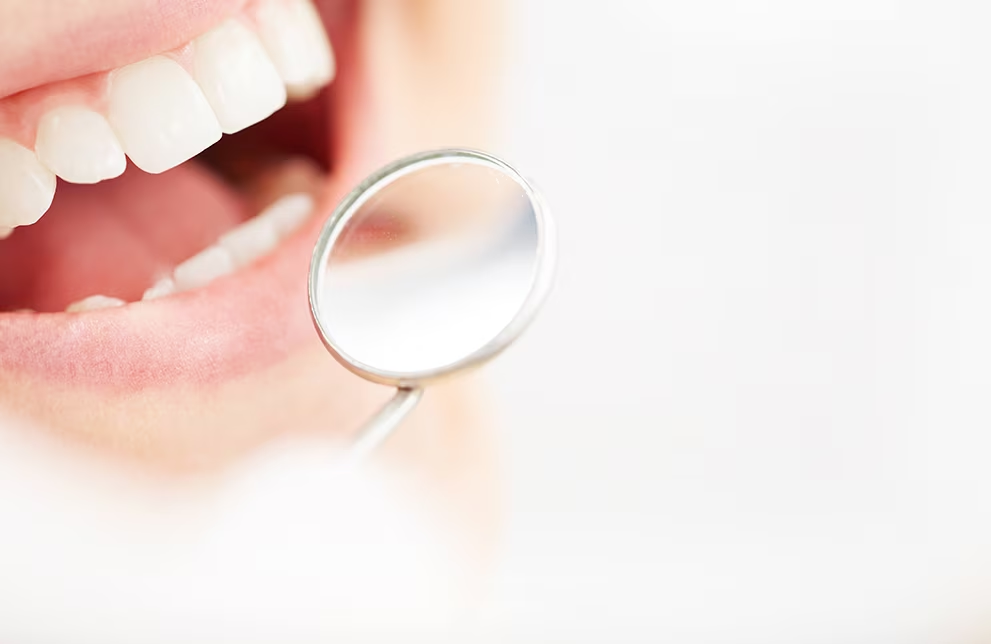
Our team is trained in a simple, quick screening that involves an examination of your oral cavity as a whole, and not just your teeth, to detect cancerous and precancerous conditions. Besides a visual examination of your mouth, we will also feel the tissue of your mouth and throat to detect any abnormalities. If we find an area of concern, we may perform a simple test, such as a brush test, which collects cells from a suspicious lesion in the mouth to be sent to a laboratory for analysis. If this test comes back atypical or positive, we may recommend a biopsy.
Aside from receiving an oral cancer screening during your checkup at our office, there are many things you can do to help prevent oral cancer. The best way to prevent oral cancer is to avoid all tobacco products and only drink alcohol in moderation. Maintain a healthy, balanced diet. Limit your exposure to the sun and always wear UV-A/B-blocking, sun-protective lotions on your skin as well as your lips.
During your next dental appointment, ask your dentist to perform an oral exam. Early detection of oral cancer can improve the chance of successful treatment.
Brushing Instructions
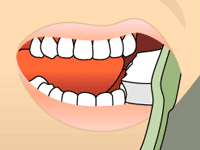
Brushing: Step 1
Place your toothbrush at a 45-degree angle to your gum.
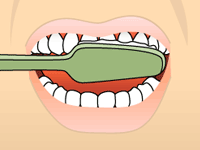
Brushing: Step 2
Brush gently in a circular motion.
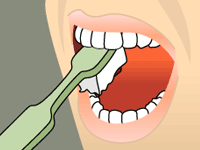
Brushing: Step 3
Brush the outer, inner, and chewing surfaces of each tooth.
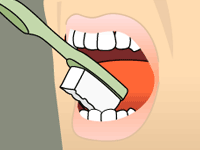
Brushing: Step 4
Use the tip of your brush for the inner surface of your front teeth.
Flossing Instructions
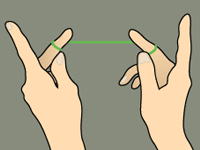
Flossing: Step 1
Wind about 18 inches of floss around your fingers as shown. Most of it should be wrapped around one finger, and the other finger takes it up as the floss is used.
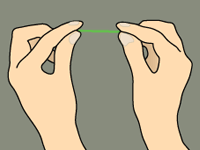
Flossing: Step 2
Use your thumbs and forefingers to guide about one inch of floss between your teeth.
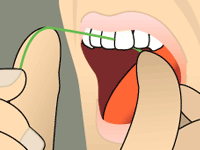
Flossing: Step 3
Holding the floss tightly, gently saw it between your teeth. Then curve the floss into a C-shape against one tooth and gently slide it beneath your gums.
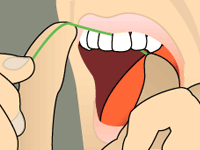
Flossing: Step 4
Slide the floss up and down, repeating for each tooth.
The information provided on this page is for educational and informational purposes only and is not a substitute for professional dental or medical advice, diagnosis, or treatment. Always seek the guidance of a qualified dental professional or healthcare provider with any questions you may have regarding a medical or dental condition. Individual results may vary.


 , the image or video has been created in part by artificial intelligence models.