City View Dental Studio
Sleep Apnea Treatment & Oral Appliance Therapy in Albuquerque, NM

Sleep well and wake up refreshed with non-invasive help for sleep apnea.
If you’re an Albuquerque resident who snores, wakes gasping or feels excessively tired during the day, you might have obstructive sleep apnea (OSA). Our Albuquerque dental team offers oral appliance therapy and other non-invasive treatments for sleep apnea.
What is sleep apnea?
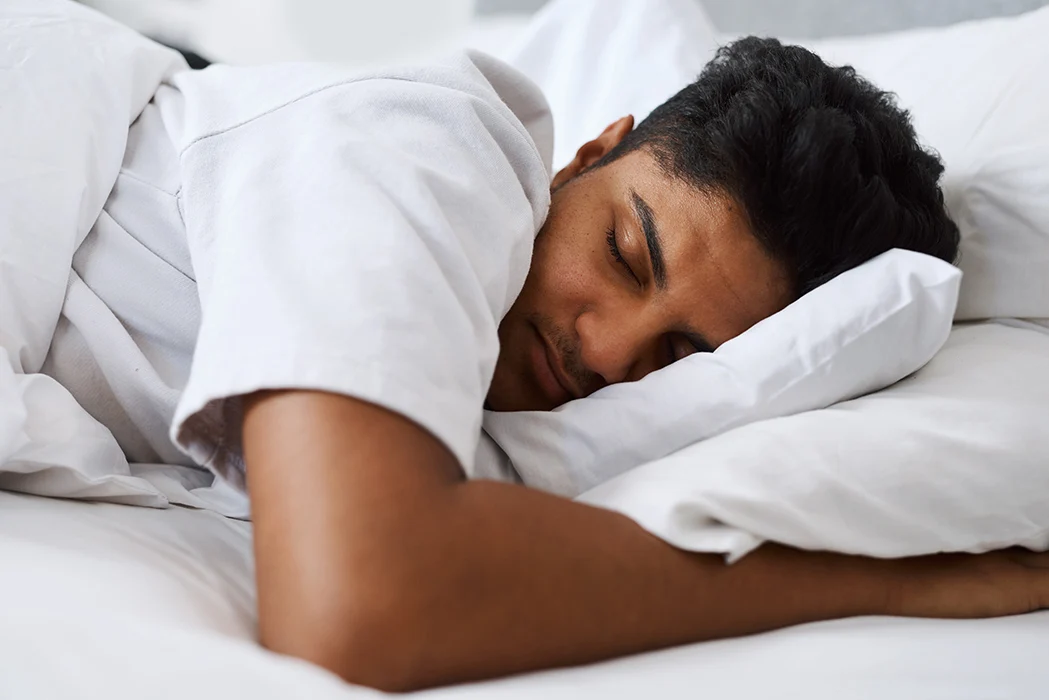
Sleep apnea is a condition in which your breathing stops periodically during sleep, as many as 20-30 times per hour.
Each time you stop breathing in your sleep, the resulting lack of oxygen alerts your brain, which temporarily wakes you up to restart proper breathing. Since the time spent awake is so brief, most people with sleep apnea don’t remember it, and many believe they are getting a good night’s sleep when, in fact, they are not. The constant wake-sleep, wake-sleep cycle prevents those with sleep apnea from achieving deep sleep, resulting in a constant drowsy feeling during the day.
What are the signs of sleep apnea?
The following symptoms can indicate the presence of sleep apnea.
If you notice one or more of these, contact our practice.
- Insomnia or difficulty sleeping
- Loud snoring at night
- Waking up at night short of breath
- Snorting or choking sounds during the night (indicating a restart of breathing)
- Headaches upon waking in the morning
- Falling asleep unintentionally during the day
- Extreme drowsiness throughout the day
Are there different types of sleep apnea?
Sleep apnea can occur in several different forms.
The most common type of sleep apnea is called obstructive sleep apnea (OSA), and occurs due to a physical blockage, usually the collapsing of the soft tissue in the back of the throat.
Less common is central sleep apnea (CSA), in which breathing stops because the muscles involved don’t receive the proper signal from the brain. And some people suffer from “mixed” or “complex” sleep apnea, which is a combination of obstructive and central.
Upper airway resistance syndrome (UARS) is a milder form where the airway narrows but doesn’t fully collapse, causing increased breathing effort that disrupts sleep quality. These conditions fall under the broader category of sleep disordered breathing (SDB), which encompasses the full spectrum of abnormal breathing patterns during sleep, from simple snoring to severe apnea episodes.
What are risk factors for sleep apnea?
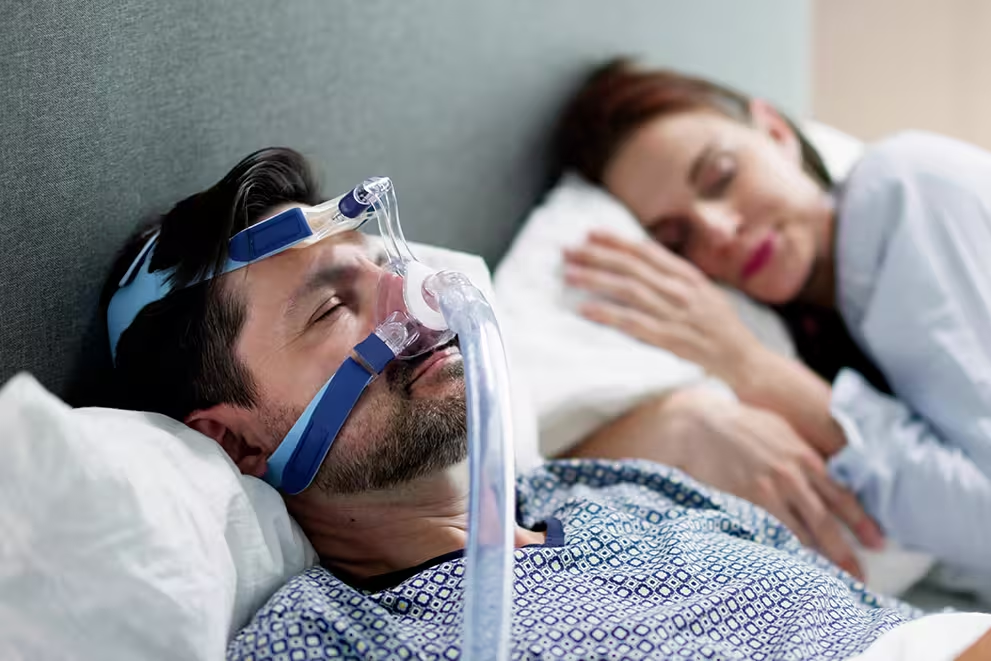
Obstructive sleep apnea is more common in males than females, and more common in older adults (40+) than younger adults and children.
However, anyone — regardless of gender or age — can suffer from sleep apnea. Other risk factors include obesity, smoking, drinking, use of sedatives or tranquilizers, and family history. Central sleep apnea strikes most often in people with heart disorders, neuromuscular disorders, strokes, or brain tumors.
Is sleep apnea dangerous?
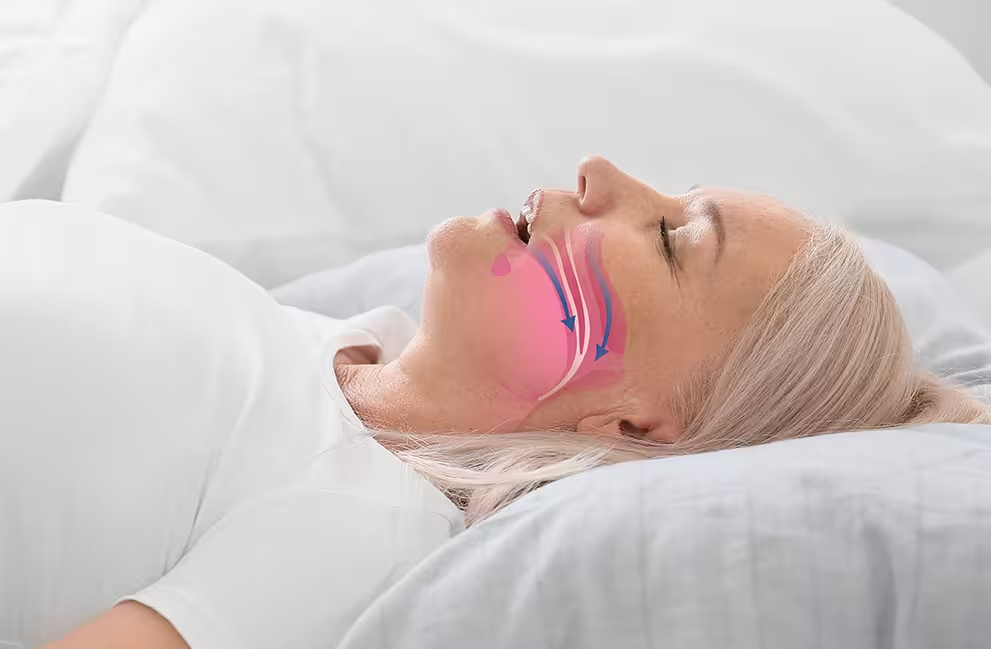
Sleep apnea is considered a serious medical problem and if left untreated it can lead to high blood pressure, increasing the risk of heart failure and stroke.
The ongoing state of fatigue caused by sleep apnea can lead to problems at work or school, as well as danger when driving or operating heavy machinery. Sleep apnea can also cause complications with medication or surgery; sedation by anesthesia can be risky, as can lying flat in bed after an operation. If you know or suspect you suffer from sleep apnea, let your family doctor know before taking prescribed medication or having surgery.
How is sleep apnea treated?
Located at 4830 Juan Tabo Blvd NE in Albuquerque, City View Dental Studio serves the greater Albuquerque and East-Mountain communities with advanced sleep apnea solutions.
Treatment for obstructive sleep apnea (OSA) depends on how severe it is and your individual dental and medical profile. At City View Dental Studio in Albuquerque we offer behavioral strategies plus custom oral appliance therapy (a proven, non-CPAP alternative) and advanced options like ApnoMed® oral appliances and NightLase® laser soft-tissue tightening for snoring and mild-to-moderate OSA.
APNOMED®
APNOMED, IS AN FDA-CLEARED ORAL SLEEP DEVICE DESIGNED TO IMPROVE SLEEP QUALITY BY TREATING OBSTRUCTIVE SLEEP APNEA AND SNORING.
ApnoMed® devices are designed to help manage sleep apnea symptoms while avoiding issues like permanent tooth movement, bite change, and jaw pain that can occur with conventional oral appliances.
The system includes a custom sleep appliance along with an AM Aligner (morning positioner) that helps maintain your natural bite alignment. This innovative approach provides effective sleep apnea treatment while protecting your long-term dental health and comfort.
NightLase®
Fotona’s NightLase® therapy is a non-invasive, patient-friendly laser treatment for increasing the quality of a patient’s sleep.
NightLase reduces the effects of sleep apnea and decreases the amplitude of snoring by means of a gentle, laser-induced tightening effect caused by the contraction of collagen in the oral mucosa tissue.
A full course of NightLase consists of three separate treatment sessions over a six week period. The final results of the treatment have been shown to last up to a year, and the therapy can be repeated. NightLase requires no device to be worn during sleep and involves no chemical treatment. It’s a gentle and easy way for your patients to regain a good night’s rest.
The information provided on this page is for educational and informational purposes only and is not a substitute for professional dental or medical advice, diagnosis, or treatment. Always seek the guidance of a qualified dental professional or healthcare provider with any questions you may have regarding a medical or dental condition. Individual results may vary.


 , the image or video has been created in part by artificial intelligence models.